
Insurance
Services
Our Insurance blog posts
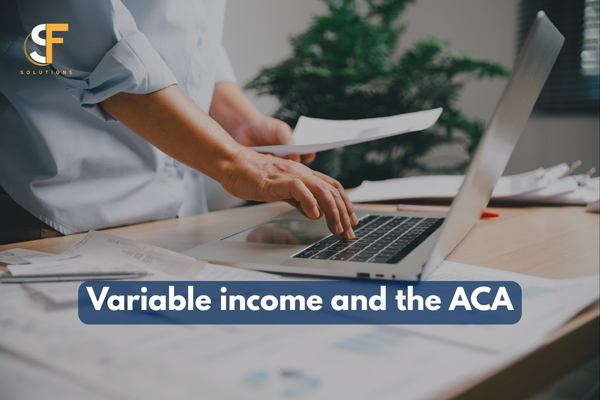
Do Fluctuating Income Levels Prevent Me from Applying for ACA Health Insurance?
One of the most common concerns among self-employed individuals and commission-based workers is:
If my income changes month to month, can I still apply for an ACA health insurance plan?
The short answer is: Yes, you absolutely can.
Having fluctuating income does not prevent you from qualifying for Marketplace health insurance. However, it does require understanding how income estimation works and how to manage updates responsibly.
In this evergreen guide, we will explain:
How the Marketplace evaluates income
How to estimate variable earnings
What happens if your income increases or decreases
How premium tax credits work
Common mistakes to avoid
If you are self-employed or have irregular earnings, this guide is for you.
How the Marketplace Evaluates Your Income
The Marketplace does not base eligibility on what you earn this month.
It evaluates your projected annual income.
This means you must estimate how much you expect to earn during the entire calendar year—not just during a specific month.
Eligibility is generally based on:
Modified Adjusted Gross Income (MAGI)
Household size
Tax filing status
State of residence
What matters most is your total annual estimate—not monthly fluctuations.
Who Typically Has Fluctuating Income?
Income variability is common in many professions, including:
Real estate agents
Freelancers
Contractors
Commission-based sales professionals
Gig economy workers
Small business owners
Consultants
If your income changes month to month, you are not alone—and you are not disqualified.
How to Estimate Variable Income Accurately
The key is to make a realistic annual projection.
You can do this in several ways.
1. Use Last Year’s Income as a Reference
If your business activity is relatively stable, your prior year’s tax return can provide a reasonable estimate.
2. Calculate an Average
If you have several months of current income data, calculate an average monthly income and multiply by 12.
3. Include Confirmed Contracts or Projects
If you have signed contracts or predictable upcoming revenue, factor that into your projection.
The goal is not perfection—it is a good-faith estimate.
What Happens If My Income Changes During the Year?
The Marketplace allows you to update your income at any time if there is a significant change.
You should report changes if:
Your income increases substantially
Your income decreases significantly
Your household size changes
Updating your income helps prevent:
Unexpected tax adjustments
Repayment of excess premium tax credits
Financial surprises at tax time
Staying proactive protects you.

How Premium Tax Credits Work with Variable Income
Many ACA plans include advance premium tax credits that reduce your monthly premium.
The amount of financial assistance you receive is based on your projected annual income.
If you underestimate and earn more:
You may need to repay part of the subsidy when filing taxes.
If you overestimate and earn less:
You may receive additional tax credit at filing time.
Accurate estimation minimizes adjustment risks.
Will Low Income Disqualify Me?
It depends on your state.
In states that expanded Medicaid:
Very low income may qualify you for Medicaid instead of Marketplace coverage.
In states without Medicaid expansion:
Certain income ranges may fall into a coverage gap.
Your state of residence plays a significant role in eligibility determination.
Common Fear: “If I Earn More, Will I Lose My Insurance?”
You do not automatically lose your coverage if your income increases.
What changes is your subsidy amount.
As long as you report changes and remain eligible, your plan can continue.
Problems arise only when income changes are not reported.
What Income Should Be Included?
You should include:
Projected net self-employment income
Wages
Household taxable income
Any other reportable earnings
You should not include:
Loans
Gifts
Non-taxable reimbursements
The Marketplace bases calculations on taxable projected income.
The Risk of Not Updating Income
Some individuals:
Intentionally underestimate income
Experience higher earnings
Fail to report updates
At tax filing, the IRS reconciles advance premium tax credits using Form 1095-A.
If income was underreported, repayment may be required.
Regular updates reduce this risk.

Smart Strategies for Managing Variable Income
1. Estimate Conservatively but Honestly
Avoid intentional underestimation.
2. Review Income Quarterly
Reassess every three months to determine whether updates are needed.
3. Maintain Organized Records
Keep invoices, bank statements, expense records, and basic bookkeeping.
4. Seek Professional Guidance if Needed
If you have multiple income streams, professional advice may help prevent tax complications.
Why Coverage Still Matters with Variable Income
Fluctuating income does not eliminate health risk.
In fact, self-employed individuals often have:
No employer-sponsored coverage
No paid sick leave
No disability protection
Health insurance protects against:
Hospitalization
Emergency care
Major diagnoses
Financial instability
Medical risk does not pause when income fluctuates.
Frequently Asked Questions
Can I apply if this month was slow financially?
Yes. What matters is your projected annual income.
What if I earn more than expected?
You may repay part of the subsidy at tax time, depending on your income level.
Will I be denied because my income is unstable?
No. Variable income alone does not disqualify you.
Conclusion: Fluctuating Income Does Not Mean Ineligibility
Having variable income does not prevent you from applying for ACA health insurance.
The system is designed to work with annual income projections—not monthly stability.
The key is:
Estimate responsibly
Update when necessary
Maintain transparency
Keep organized records
Health insurance is not only for individuals with fixed salaries.
It is for anyone who wants to protect their health and financial stability.
Planning properly today prevents complications tomorrow.

We offer a wide range of insurance services, backed by the best companies on the market, designed to cover all your protection needs.

Available Policies
Health Insurance
Obamacare
Medicare
Private Insurance
Corporate insurance packages
Life Insurance
Individual
Group
Indexed Policies
Indexed policies are life insurance that grow in value according to the market.
If the market goes up, your money grows.
If the market goes down, you don't lose because there is cero risk.
It is a safe way to invest and protect your money.
Medicaid and Social Security Benefits Advisory
Supplemental Coverage
Dental
Vision
Hearing
Accidents
Cancer
Disability
Out-of-Pocket Insurance
An out-of-pocket insurance is a policy designed to protect you from the highest medical costs. This insurance pays medical expenses that exceed a certain limit, ensuring that you do not have to pay more than a specific amount. This way, it helps you manage unexpected and high healthcare costs, providing you with financial peace of mind.
Internation Health Insurance
We offer insurance in the USA, Mexico, and worldwide.
Our Commercial Partners



Call Us Now
469-405-7054


