
Insurance
Services
Our Insurance blog posts
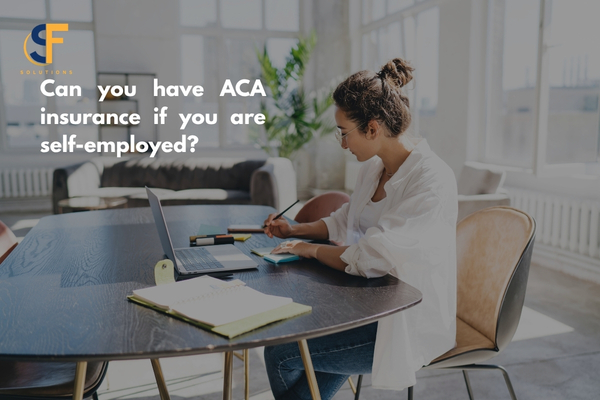
Can You Get ACA Health Insurance as a Self-Employed Worker?
One of the most common questions among freelancers, contractors, and small business owners is:
Can I get ACA health insurance if I’m self-employed and don’t have an employer?
The answer is simple: Yes, absolutely.
In fact, the Marketplace was specifically created to serve individuals who do not have access to employer-sponsored health insurance. This includes millions of self-employed workers across the United States.
In this guide, we’ll explain:
How ACA health insurance works for self-employed individuals
Eligibility requirements
How income is calculated
How subsidies apply
What documents you may need
Common mistakes to avoid
If you work for yourself, this guide is for you.
What Is ACA Health Insurance?
ACA (Affordable Care Act) health insurance refers to private plans sold through the federal or state Marketplace that comply with federal regulations.
These plans:
Cannot deny coverage due to pre-existing conditions
Include essential health benefits
Have annual out-of-pocket maximum limits
May qualify for premium tax credits
You do not need an employer to enroll.
Who Qualifies as Self-Employed?
You are considered self-employed if you:
Work for yourself
Receive 1099 income
Operate as an independent contractor
Own a small business
Work as a freelancer
Earn commission-based income
If you do not receive a traditional W-2 but earn taxable income independently, you can apply.
Do I Need to Have a Registered Business?
No.
You do not need an LLC or corporation to apply.
You may enroll as:
A sole proprietor
An independent contractor
A freelancer
A self-employed individual reporting income on your tax return
The key requirement is properly estimating and reporting your projected annual income.
How Income Is Calculated in the Marketplace
The Marketplace evaluates your projected annual income—not your current monthly earnings.
Eligibility is based on:
Modified Adjusted Gross Income (MAGI)
Household size
Tax filing status
State of residence
For self-employed individuals, income is typically calculated as:
Gross business income
Minus allowable business expenses
Equals projected net income
That projected annual figure determines eligibility and subsidy levels.

Can Self-Employed Workers Qualify for Subsidies?
Yes.
Many self-employed individuals qualify for advance premium tax credits that lower monthly premiums.
Subsidy eligibility depends on:
Annual projected income
Household size
Federal Poverty Level guidelines
State of residence
Even if your income fluctuates, you may still qualify as long as your projected annual income falls within eligible ranges.
What If My Income Changes During the Year?
Income fluctuations are common among independent workers.
If during the year:
Your income increases significantly
Your income decreases substantially
Your household size changes
You should update your information in the Marketplace.
Failing to update may result in:
Repayment of excess premium tax credits
Tax reconciliation issues
Unexpected financial adjustments
Keeping information current protects you from surprises.
Advantages of ACA Plans for Self-Employed Workers
1. Protection Against Major Medical Expenses
Without employer coverage, self-employed individuals face full exposure to healthcare costs.
2. Annual Out-of-Pocket Maximum
ACA-compliant plans limit your total yearly financial responsibility for covered services.
3. Preventive Care Coverage
Annual checkups, screenings, and vaccines are typically covered.
4. Access to Specialists
Many plans include strong provider networks depending on your region.
What Should You Consider When Choosing a Plan?
Do not choose a plan based solely on the lowest monthly premium.
Evaluate:
Deductible
Copays
Coinsurance
Out-of-pocket maximum
Provider network
Prescription drug coverage
A lower premium often means higher financial exposure when you need care.
What Documents Might Be Required?
The Marketplace may request:
Prior year tax return
Proof of income
Bank statements
Contracts or invoices
Self-employment documentation
Keeping organized records makes the process smoother.

Common Myths About Self-Employed ACA Coverage
“I Can’t Qualify Without an Employer”
False. The Marketplace is specifically designed for people without employer-sponsored insurance.
“My Income Changes Too Much”
The system uses annual projections, not monthly stability.
“If I Earn More, They Cancel My Insurance”
Not necessarily. Your subsidy may adjust, but coverage can continue as long as you remain eligible and update income accurately.
What Happens If You Stay Uninsured?
Self-employed workers without coverage face:
Full hospital charges
No negotiated rates
No annual spending limit
Potential medical debt
Unlike traditional employees, you likely do not have:
Employer benefits
Paid sick leave
Disability coverage
This makes proactive health insurance planning even more important.
Smart Strategy for Independent Workers
Project income realistically.
Review options during Open Enrollment.
Update income if significant changes occur.
Maintain organized bookkeeping.
Focus on protection, not just premium savings.
Health insurance is part of your overall financial planning strategy as a business owner.
Conclusion: Yes, You Can—and You Should Consider It
Being self-employed does not prevent you from enrolling in an ACA health insurance plan.
In fact, the Marketplace was built to provide coverage options for individuals like you.
Income variability does not equal ineligibility.
The key is:
Honest income estimation
Timely updates
Informed plan selection
Long-term protection planning
Your business matters.
Your health and financial stability matter just as much.

We offer a wide range of insurance services, backed by the best companies on the market, designed to cover all your protection needs.

Available Policies
Health Insurance
Obamacare
Medicare
Private Insurance
Corporate insurance packages
Life Insurance
Individual
Group
Indexed Policies
Indexed policies are life insurance that grow in value according to the market.
If the market goes up, your money grows.
If the market goes down, you don't lose because there is cero risk.
It is a safe way to invest and protect your money.
Medicaid and Social Security Benefits Advisory
Supplemental Coverage
Dental
Vision
Hearing
Accidents
Cancer
Disability
Out-of-Pocket Insurance
An out-of-pocket insurance is a policy designed to protect you from the highest medical costs. This insurance pays medical expenses that exceed a certain limit, ensuring that you do not have to pay more than a specific amount. This way, it helps you manage unexpected and high healthcare costs, providing you with financial peace of mind.
Internation Health Insurance
We offer insurance in the USA, Mexico, and worldwide.
Our Commercial Partners


Call Us Now
469-405-7054


